The electromagnetic battlespace lessons from Ukraine aren't academic exercises—they're urgent operational problems that demand immediate solutions. As documented in our previous analysis, the signals environment has fundamentally transformed warfare: fiber-optic drones rendering jamming obsolete, direction-finding capabilities weaponized against EW installations, and autonomous systems operating independently of GPS and communications links.
The United States military—particularly the Marine Corps—has responded with unprecedented urgency. A new generation of defense technology companies is emerging, unencumbered by traditional acquisition timelines and building systems designed specifically for the contested spectrum environment. This analysis examines the companies, programs, and doctrinal shifts positioning American forces to achieve drone dominance by 2027.
The Strategic Imperative
Defense Secretary Pete Hegseth's July 2025 directive, "Unleashing U.S. Military Drone Dominance," marked a decisive shift in American posture. The memo acknowledged what observers of Ukraine had long understood: drones account for the majority of battlefield casualties and the U.S. had fallen behind.
"Our adversaries collectively produce millions of cheap drones each year," Hegseth wrote. "While global military drone production skyrocketed over the last three years, the previous administration deployed red tape. US units are not outfitted with the lethal small drones the modern battlefield requires."
Defense Tech: The New Arsenal
A cohort of defense companies—both venture-backed startups and established manufacturers—has emerged to fill the gap between Silicon Valley innovation and Pentagon requirements. Unlike traditional defense primes constrained by legacy acquisition processes, these firms operate on Ukrainian timescales—weeks and months rather than years and decades.
Neros Technologies
"Building unmanned superiority. At scale. In America."
Founded: 2023 • El Segundo, California
Funding: $75 million Series B led by Sequoia Capital (November 2025)
Neros represents the purest expression of the new American drone manufacturing ethos: combat-proven FPV systems built at scale without Chinese components. Founded by Soren Monroe-Anderson (CEO) and a team including a former professional drone racer and 2020 MultiGP World Champion, the company traveled to Ukraine in its early days to understand exactly how FPV drones were being employed on the battlefield.
The result is the Archer—the first FPV platform on the BlueUAS list and the highest production rate drone built in the United States. The 8-inch quadcopter delivers a 4.5 lb payload over 20 kilometers at speeds up to 160 km/h, paired with the Crossbow (now Flatbow) ground control station that provides advanced jamming resistance in contested environments.
Neros Production & Contracts:
Current Production: 1,500 drones/month (targeting 10,000/month by end of 2025)
Army PBAS: Selected as one of three primary FPV manufacturers for Purpose-Built Attritable Systems program
Marine Corps: Multi-million dollar contract for Archer Strike FPVs across Fleet Marine Force
Distribution: Two-thirds to Ukraine, one-third to U.S. military (Marines, Army, SOCOM)
"These important procurement programs signal the Army's and the DoW's seriousness in addressing critical gaps in our drone capabilities and industrial base," said Monroe-Anderson. The company was sanctioned by China in December 2024—which Neros called "a badge of honor."
AeroVironment
Founded: 1971 by Dr. Paul MacCready • Arlington, Virginia
Market Cap: $17+ billion (NASDAQ: AVAV) • Stock up 150%+ YTD
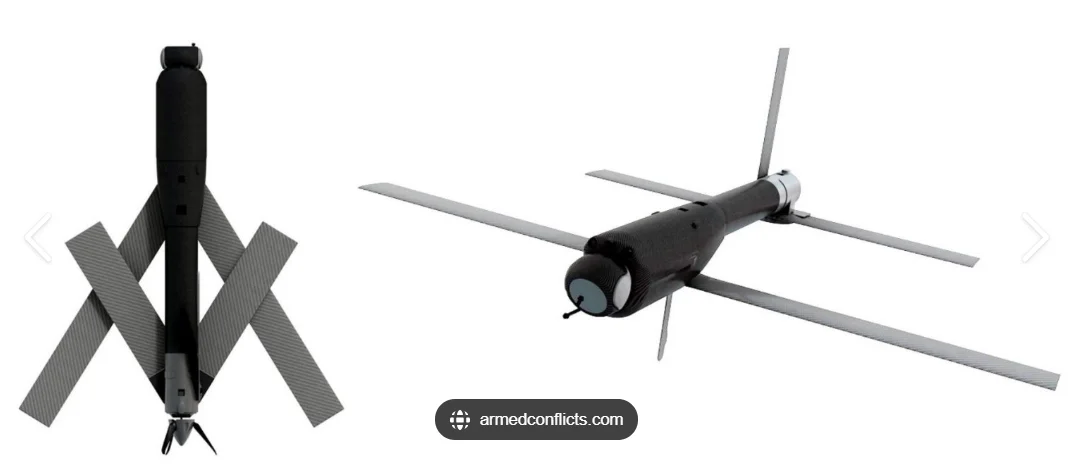
The elder statesman of American tactical drones, AeroVironment has supplied the military's most widely used small UAS for decades: RQ-11 Raven for squad reconnaissance, Puma for all-weather operations, and the Switchblade loitering munition that's seen extensive combat in Ukraine. But 2025 marked a transformation—the company beat RTX to win the Army's Next-Generation Counter-UAS Missile program.
2025 Contract Wins:
$499M: Air Force HELMSSMAN electromagnetic spectrum protection (10-year IDIQ)
$96M: Army Freedom Eagle-1 counter-drone missile (LRKI program)
$240M: Space laser communication terminals
OPF-L: $8.9M initial order for Switchblade 300 Block 20 (Marine Corps)
"For the first time in our lifetimes, there's a new missile manufacturer on the street," said Jimmy Jenkins, AeroVironment's executive VP. The Freedom Eagle-1 kinetic interceptor targets Group 2/3 drones and subsonic cruise missiles—purpose-built by a drone maker to kill drones.
Kratos Defense
Market Cap: $4.8 billion (NASDAQ: KTOS)
Key Platform: XQ-58 Valkyrie autonomous jet—first CCA in production for Marines
Kratos pioneered the concept of affordable, attritable autonomous fighter aircraft. The XQ-58 Valkyrie—a runway-independent, high-subsonic stealth drone—has been flying since 2019 and is now transitioning from experimental to program of record with the Marine Corps under the MUX TACAIR program.
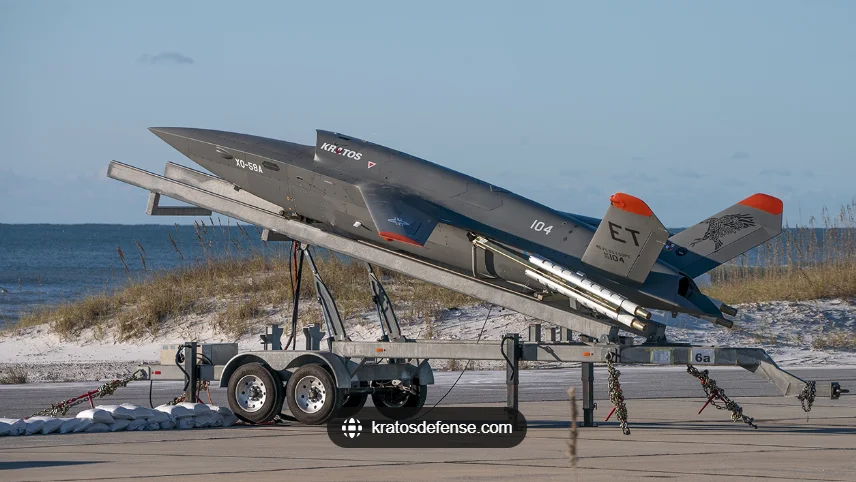
XQ-58 Valkyrie Specifications:
Range: 3,000+ nautical miles (5,600 km)
Speed: Mach 0.86 (high subsonic)
Ceiling: 45,000 feet
Payload: Internal bomb bay + wing stations (GBU-39 SDB, AIM-120 AMRAAM)
Unit Cost: $2-10 million depending on configuration and volume
The Marines have tested Valkyrie extensively for electronic warfare and SEAD missions. Kratos has already begun serial production of 24 jets ahead of contract award, with long-lead items ordered for 24 more. "We could have 15 aircraft ready to deliver immediately upon contract award," said CEO Eric DeMarco. Airbus announced a July 2025 partnership to develop a German Luftwaffe version combat-ready by 2029.
Anduril Industries
Valuation: $30.5 billion (June 2025)
Anduril's Lattice operating system represents the most comprehensive attempt to solve the contested spectrum problem. The platform uses AI to fuse data from disparate sensors, enabling coordinated autonomous operations even when individual communication links are severed.
The company's Arsenal-1 hyperscale manufacturing facility in Columbus, Ohio—a $1 billion investment spanning 5 million square feet—aims to produce tens of thousands of autonomous systems annually beginning July 2026.

Shield AI
Valuation: $2.8 billion
Ukraine Performance: 160+ combat sorties with V-BAT, operations within 1 km of Russian jammers
Shield AI's V-BAT has proven what matters most: the ability to complete missions when everything else fails. Ukrainian forces used V-BAT to locate a Russian SA-11 Buk-M1—then guided HIMARS to destroy it. The October 2025 X-BAT unveiling—a $27 million jet-powered autonomous fighter with 2,000+ mile range—demonstrates the trajectory of this technology.

Teledyne FLIR Defense
Parent: Teledyne Technologies (NYSE: TDY)
Key Platform: Rogue 1 VTOL loitering munition
Best known for thermal cameras, Teledyne FLIR has built a comprehensive drone portfolio including the Black Hornet nano-drone and SkyRanger surveillance quadcopter. Their Rogue 1 loitering munition—secretly tested by SOCOM since 2022—brings a unique capability: recoverable and reusable when targets are disengaged, with interchangeable warheads (EFP, forward fragmenting, training).
Rogue 1 Specifications:
Initial Order: 127 units at $12 million (~$94K/unit)
Flight Time: 30 minutes • Burst speed 70+ mph • Range 6+ miles
IDIQ Ceiling: $249 million under OPF-L program
Saronic Technologies
Valuation: $4 billion
Navy Contract: $392 million OTA through 2031
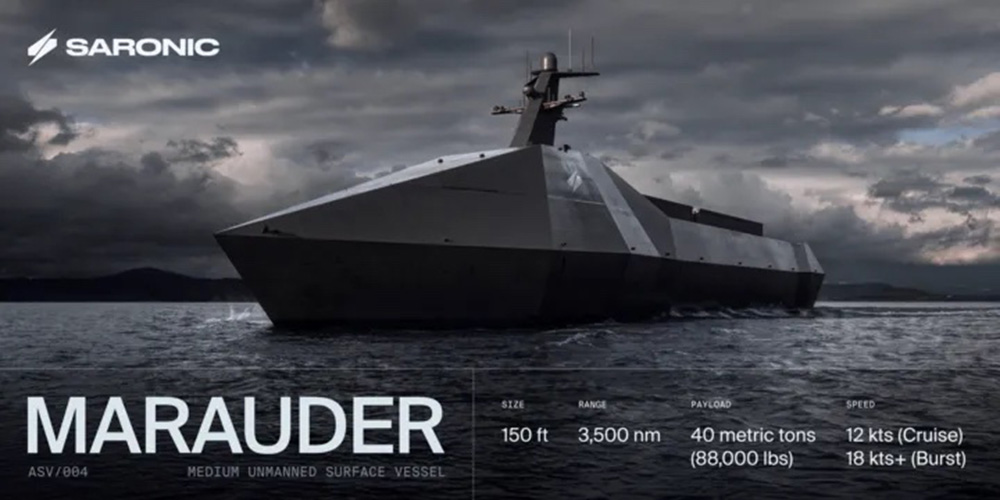
Saronic represents the maritime dimension of autonomous warfare. Their fleet—from the 6ft Spyglass to the 150ft Marauder—provides scalable solutions from reconnaissance to strike. The Marauder, with 3,500 nautical mile range, went from first weld to water in six months. Plans for "Port Alpha"—the most advanced autonomous shipyard in the world—signal ambitions to transform naval construction itself.
Skydio
Valuation: $2.2 billion
Units Delivered: 45,000+ to U.S. military and 25 allied nations
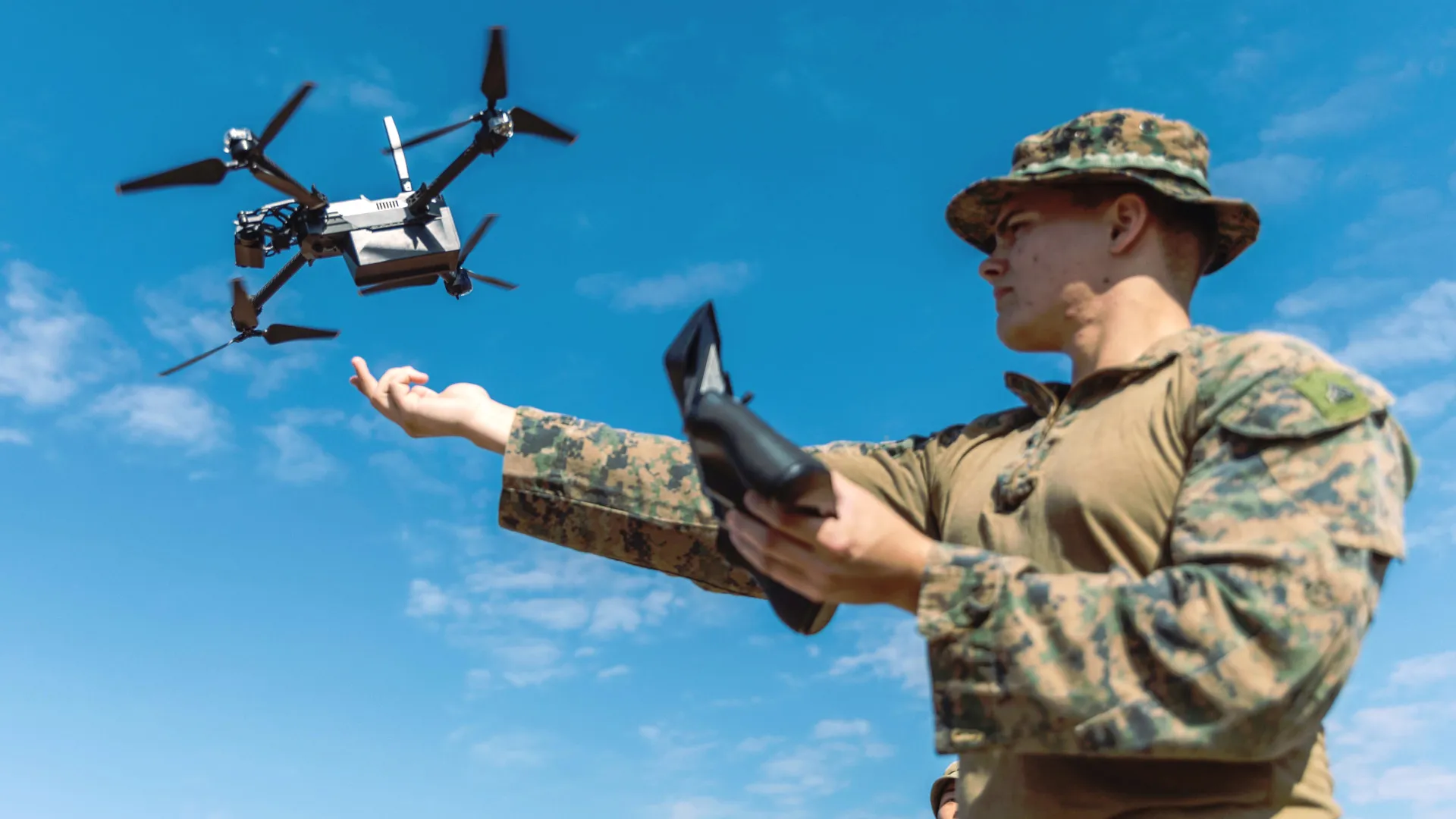
Skydio's X10D solves the small-unit reconnaissance problem with American-made systems that don't rely on Chinese components. The platform processes 100 million calculations per second using six navigation cameras, enabling autonomous flight through contested RF and GPS environments. Their Hayward, California facility is one of the largest drone manufacturing plants outside China.
Marine Corps Transformation
The Marine Corps has embraced drone warfare with characteristic aggression. "Every Marine a rifleman" may evolve to "Every Marine a drone pilot," according to Lt. Gen. Benjamin Watson. The service's transformation spans acquisition, training, and doctrine.
Organic Precision Fires-Light (OPF-L)
The OPF-Light program will deliver loitering munitions to rifle squads by January 2026, with full fielding by FY2027. Three vendors received contracts totaling $249 million.
Marine Corps Attack Drone Team (MCADT)
MCADT has identified the Neros Archer FPV as an approved platform—the same system provided to Ukraine by the thousands. Neros secured a multi-million dollar contract to supply Archer Strike FPVs with comprehensive operator training across the Fleet Marine Force. The team's demonstrations showed squad-level lethality extending from meters to 20 kilometers for under $5,000 per engagement.
Counter-UAS Investment
The $642 million Anduril I-CsUAS contract will protect Marine Corps installations worldwide through 2035, providing "end-to-end capability across the entire kill chain."
The Replicator Initiative
The Pentagon's Replicator program—a $1 billion effort to field "multiple thousands" of autonomous systems—considered 500 commercial firms, awarding contracts to 30 companies with 50 subcontractors. Gen. Eric M. Smith: "Replicator is helping Marines experiment with a portfolio of systems that deliver organic, loitering, beyond-line-of-sight precision strike capability."
Forward Observations Group: The Irregular Edge

Forward Observations Group (FOG) represents a different dimension—one operating outside traditional military structures. Founded by former U.S. Army infantryman Derrick Bales, FOG has evolved into what observers describe as an unofficial conduit for combat expertise and technology transfer. The group represents irregular actors with deep tactical expertise serving as bridges between active conflict zones and formal military training.
Venezuela Contingency: A Rapid Deployment Scenario
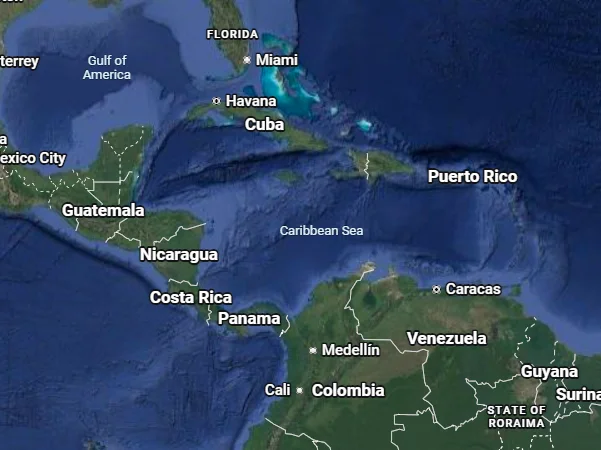
Current events provide a laboratory for examining how these capabilities might deploy. As of late 2025, the U.S. has positioned significant forces in the Caribbean: USS Gerald R. Ford Carrier Strike Group, Iwo Jima ARG with 22nd MEU, MQ-9 Reapers from Puerto Rico, and approximately 10,000 troops including 4,500 embarked Marines.
The real "overnight" capability is Lattice-style command architectures that enable heterogeneous autonomous systems to share information without continuous human oversight. Mission-level autonomy that degrades gracefully under EW pressure—the operator defines objectives; the AI figures out execution.
The Industrial Base Reality
Defense tech companies are racing to close the production gap:
Anduril Arsenal-1: Tens of thousands of systems annually by July 2026
Neros: Scaling from 1,500 to 10,000 FPV drones/month by end of 2025
Kratos: 24 Valkyries in production, 24 more in long-lead procurement
Saronic Port Alpha: Next-generation autonomous shipyard within five years
Skydio Hayward: One of the largest drone factories outside China
The question isn't whether these capabilities work—Ukraine has proven they do. The question is whether American production can scale to operational relevance before the next conflict demands it.
Key Takeaways
- Autonomy is the answer to electronic warfare. Systems like Hivemind and Lattice enable operations when GPS is denied and communications are jammed.
- American FPV manufacturing is scaling rapidly. Neros—from startup to fastest-growing U.S. drone manufacturer in two years—proves the model works.
- The Marine Corps is leading transformation. From OPF-L to MCADT to I-CsUAS, the service is systematically integrating drones at every echelon.
- Traditional and new defense compete and collaborate. AeroVironment beats RTX for C-UAS missiles while Kratos partners with Northrop on Valkyrie.
- Overnight deployment requires pre-positioned integration. The challenge is ensuring capabilities are already integrated when conflict demands them.